In the meantime, here's the announcement about something interesting taking place soon!


 The park is set just at the foothills before the ascending road to Jerusalem, near the Latrun Monastery, and just across from the IDF "Tank Museum", which is also represented in miniature form at Mini Israel.
 To the right is a cafeteria and the gift shop.


 The same archaeological sites are represented, including the Middle Bronze gate at Tel Dan....
 ...what we believe is a generic archaeological excavation near the Mediterranean shore....
 ... the Dome of the Rock...
 and the western wall.
 The bedouin camp is still represented, with everyone in traditional garb, including the women with water containers circulating around the camp tirelessly on their track.
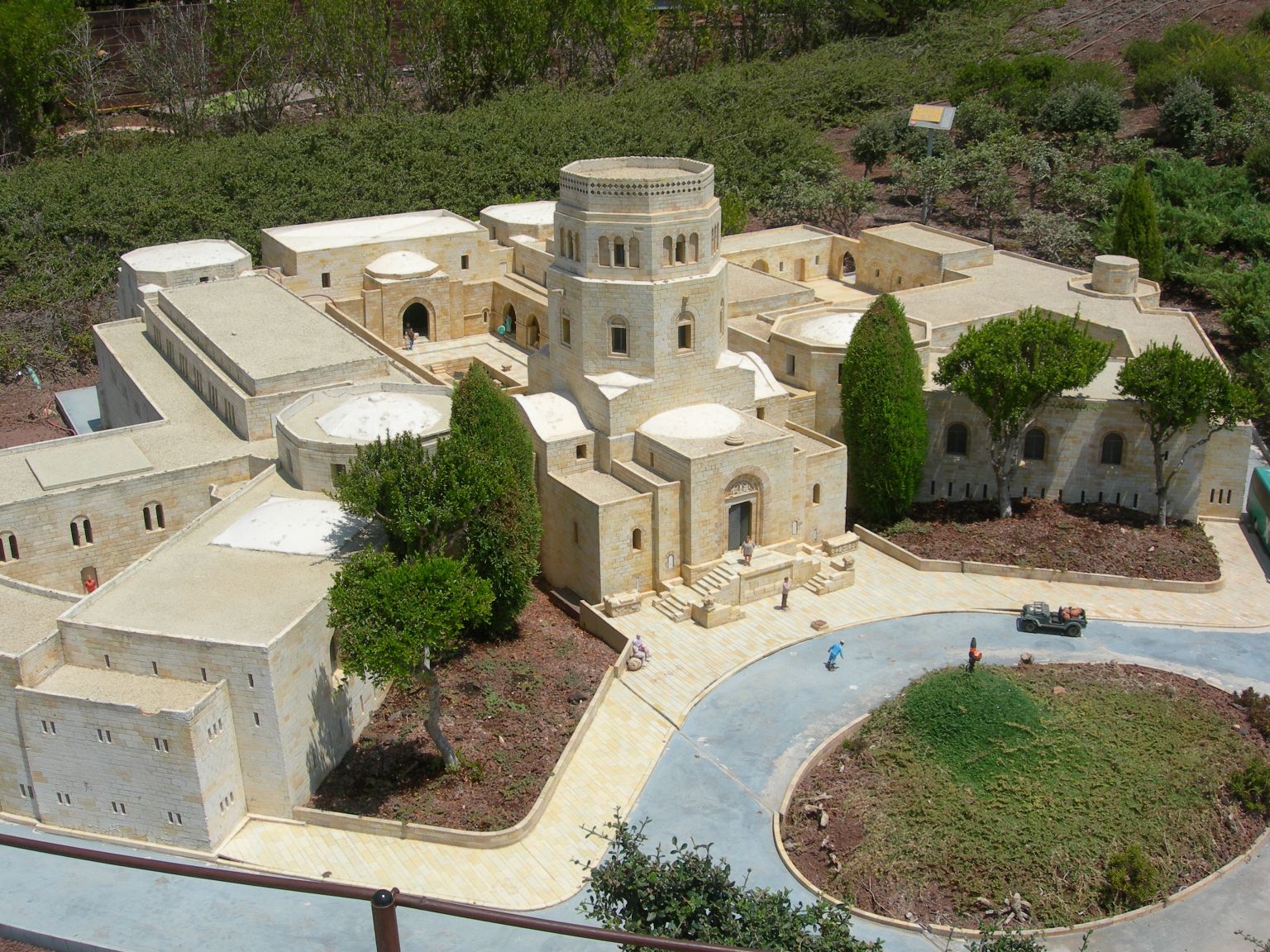
 And the Palestine Archaeological Museum, known as the Rockefeller, exists, still decontextualized from the East Jerusalem surroundings.
 But other things are new. Most striking are various representations of industry giants of Israel: Sonol (gas), Prigat (juice), Tnuva (milk products), Arkia and El Al (airlines), as well as international conglomerates such as Yoplait and Coca-Cola.
 The gift shop has changed rather dramatically. When it first opened, there was only one way out of the park - through the gift shop. Sale items in the old gift shop were a very eclectic array of kitsch, similar to what is available in many shops in the Old City. The new gift shop, which is no longer the exit from the park, is 'nicer', in that there is less kitsch, but sort of boring, in that it consists primarily of Ahava products (it seems Ahava probably bought the shop, or is a major owner) -- you know, salves, emollients, balms, unguents, lubricants, mud, salts and moisturizers. It looks more like the part of the department store you (well, Mo & Yo anyway) try to zip through quickly before someone spritzs you with something stinky.

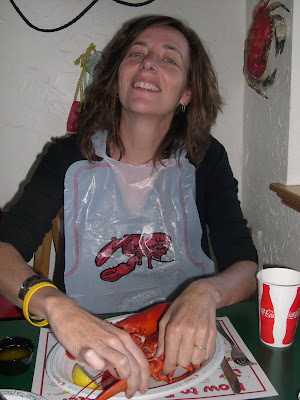
 We had to turn around at one point, deciding that we should have stopped at Petey's Lobster Shack when we had the chance. We were not disappointed. Here's Mo with her double soft shell lobster platter (which Yo ate half of, along with his own lunch!).

After we did our part in contributing to the depletion of oceanic protein, we continued up the coast to southern Maine. After a pleasant evening with our hosts C and C, and a fine sleep, we all went for a long walk on the beach the next morning, collecting sand dollars, sea glass and chasing H. around. Here we all are on the beach.


 Usually we don't have great excuses for our long silences in the blogosphere, but this week we actually do. In the next week we will move 4 times, in 3 different countries, so we won't be posting. After packing up our excavation and ourselves after three months away we leave Tel Aviv tomorrow morning at 5:30am. We arrive back in Toronto around 1:00pm and will hopefully be picked up by our amazingly kind family (LL, MRK and BDL) where we will be whisked off to the anthropology department at U Toronto, so we can pack up Mo's office. On Monday we'll pack up our car (assuming it still works. . .) and drive from Ingersoll to Chicago, where we will begin packing up our apartment. Our landlady, after sprucing the place up, sold it in July and we have to be out by September 1. On Wednesday we'll pick up the Uhaul and move across Hyde Park to another condo. Thursday and Friday will be unpacking and shipping boxes to Providence in advance of Mo's move to Brown the following Tuesday. Then we will collapse, oh sorry start teaching a class and get back into the work a day world in the lives of archaeologists. The entire time we are sure to be wishing that we were in the field, except maybe Jordan where the memory of no running water, electricity, cellphone reception and the flies still looms large. We'll be back in touch in September.
 Marj Rabba in December, 2008
In the square to the west, still inside of the room, this intriguing structure initially looked like this:
 But once we finished excavating the interior, it turned out to be a well built stone pit, perhaps a silo. Here, it is in the top of the picture below, built up against the bedrock, just below the wall (and near the corner of the two walls).
 Here's a close-up view.

Sometimes when you need shadow for photography, you can just line up some archaeologists to get the job done.
 Other times, you might have to bribe them with suckers!

Of course it isn't all architecture. We found buckets of pottery, flint debris and tools, and well-preserved animal bone. Here is a photo of some possible "Hula ware" pottery, with the tell-tale wave incisions; whether or not this pottery really comes from the Hula valley, or merely is a style, is something we must determine.  We even found things we didn't expect! No, those aren't Mentos.


 We even bought a sign for our fencing. We fully expect that only the sign will remain by next year....
 Then we had to find someone to move the container back to Jerusalem. Look at this strong guy, almost independently putting the two ton container on the back of the truck -- and in white pants too!
 Thanks to the "because we're professionals" of Marj Rabba for so much hard work, early mornings and boiled eggs.