After five weeks of living in double-wide trailers, the small team working at Marj Rabba dispersed, some to continue work on the excavated material back in Jerusalem, some back to North America, some back to their homes in Sakhnin. Only a small area was exposed, but we consider it a very successful season.
Although we are very excited about the walls, architectural features and finds, we will try to rein in our enthusiasm over dirt and rocks and stick to the highlights.  Marj Rabba in December, 2008First, we were confronted with a field that looked very different from the lush green grass when we visited the site back in December. That was then. When we returned in July, we were confronted with thistles and weeds, taller than Yo or Mo in places. Bad conditions for laying out squares. The solution? Cows and goats! They did an admirable job, those hungry quadrapeds, but they don't exactly rush, so we also resorted to a weedeater. That, however, lasted only a little more than an hour before it was kaput.With our squares laid out in two areas (west is the large rock pile, east is the field), we discovered walls and other architecture in all three squares of the east section (where the tall grass was). The remains of the stone walls indicate well-built walls, and the other stone features were inside, presumably inside a room. In the photo below, you can make out the wall running acroos the top of the picture; on the right side is a curvilinear structure that presumably continues into the unexcavated area on the right (east). We aren't sure what the curving structure is, but its intriguing and we're looking forward to complete excavations in that area next year.

In the square to the west, still inside of the room, this intriguing structure initially looked like this:
 But once we finished excavating the interior, it turned out to be a well built stone pit, perhaps a silo. Here, it is in the top of the picture below, built up against the bedrock, just below the wall (and near the corner of the two walls).
 Here's a close-up view.

Sometimes when you need shadow for photography, you can just line up some archaeologists to get the job done.
 Other times, you might have to bribe them with suckers!

Of course it isn't all architecture. We found buckets of pottery, flint debris and tools, and well-preserved animal bone. Here is a photo of some possible "Hula ware" pottery, with the tell-tale wave incisions; whether or not this pottery really comes from the Hula valley, or merely is a style, is something we must determine.  We even found things we didn't expect! No, those aren't Mentos.

SNAKE EGGS! Yumm. (Okay, maybe lizard eggs.....)Over in the west area, things were much more difficult. We wanted to try to understand why these piles of rocks were left there, and when. We started by placing a trench across the wall that was visible on top of the pile of rocks.
 Mo and students SS and BJ debating how to tackle the west rock pile. The trench was about 2 meters by 10 meters, cutting across the rock pile east-west, and thus both sides of the wall.

This was hard work, digging through rocks. About 5% was sediment, the rest was small to medium sized limestone rocks, placed there by people for reasons we hoped to determine. However, there were very few artifacts: some Chalcolithic sherds and flints, and a few late Roman or Byzantine sherds. Either could easily work there way down between the rocks over millennia. In the end, our beautiful trench exposed bedrock below the well built wall, but remain unsure what to make of the wall, or the pile of rocks. Visiting archaeologists ranged in opinion; one was sure in his gut that its Chalcolithic (we liked to hear this!), but others believed that it must be much later. Yet there is almost nothing later to date the structures.
Below, this is Trench one, looking to the west; the wall is at the top, and bedrock is what the scale and north arrow are resting on.
The other side of the trench looked similar - mostly rock, and not many clues as to how it came to be there or why.
Finally, at the end of the season, we needed to try to protect both the site as well as any visitors (cow, person or goat). We sandbagged most exposed features.
Then, we covered the excavate areas with plastic, sediment and rocks.
Finally, we bought fencing to keep animals and people out, primarily so that they wouldn't hurt themselves if they didn't notice the excavated squares.
 We even bought a sign for our fencing. We fully expect that only the sign will remain by next year....

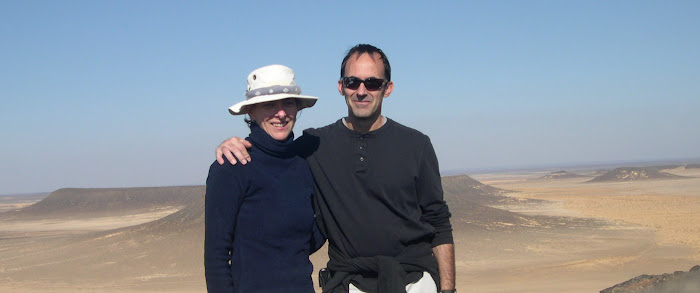
 We are off to Maitland's Mesa tomorrow. That means packing up a truck with all the provisions 4 people will need for 4 weeks. Here are two images of our intrepid crew - Prof. G, student L and Yo. In these pictures everyone looks pretty clean and happy, we'll see how they look a month from now. We will be eating all things from cans for the next month, not showering and swatting a lot of flies.
 We will also be mapping a very interesting mortuary landscape out in the panhandle of Jordan (the eastern desert near the Iraq/Saudi border). This is the site - Maitland's Mesa, which is a basalt capped mesa in the middle of nowhere. But of course at some point in time people were living there.
 You can see here the outlines of what we think are animal (think sheep/goat) pens that surround the base of the mesa; some are probably mortuary structures as well. Part of our job will be to record these features and draw them and look for artifacts, which will help date them.
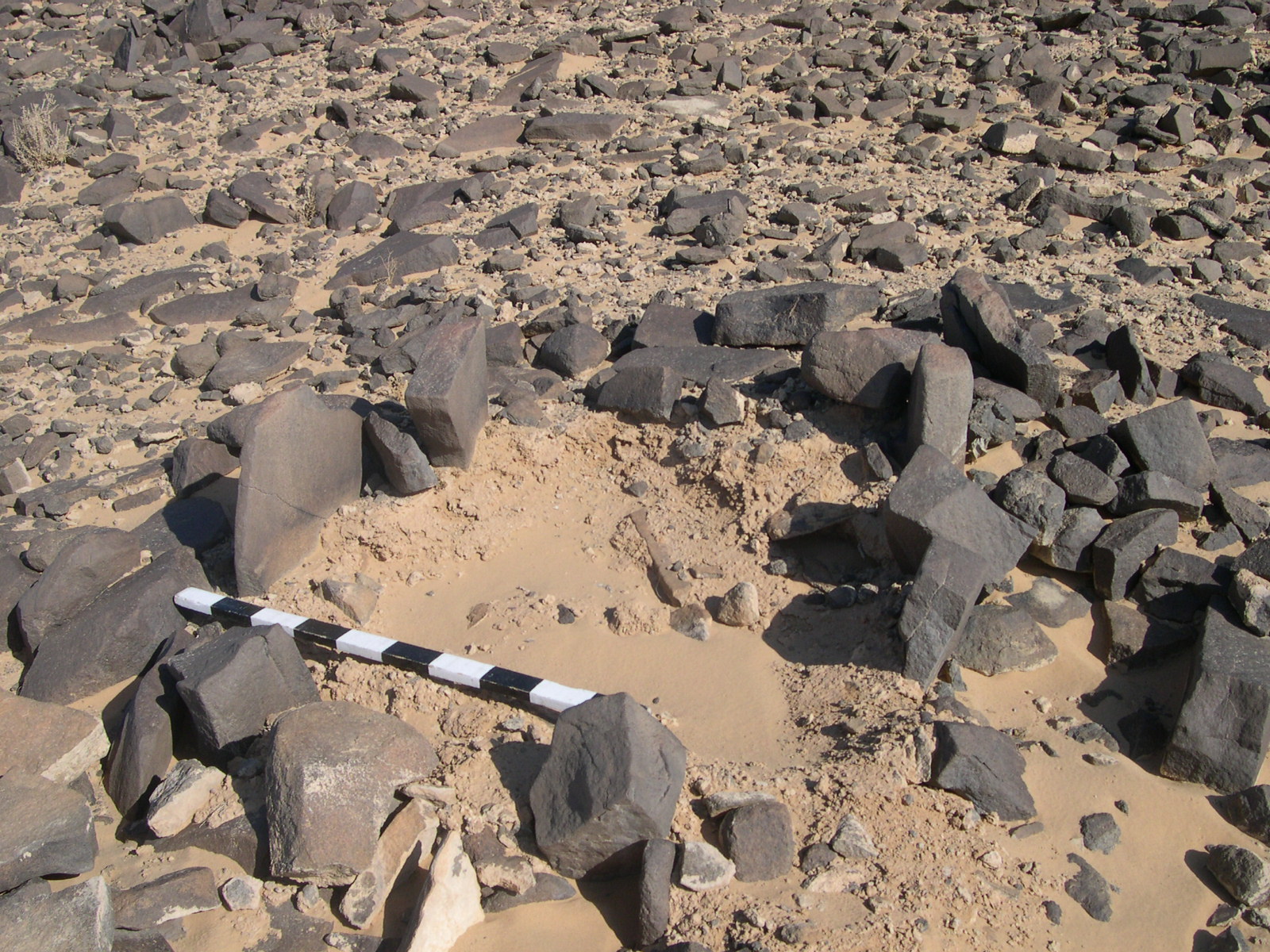 This is what an enclosure (perhaps a burial chamber or some other structure) looks like up close. So we'll be off of the grid for the next month and then we'll update our adventures in the eastern desert! At the end of the month, and after a brief foray into the wonderful world of Petra, we are off to Israel for another season at Marj Rabba. Stay tuned for future updates.